Public programs
Turning bottlenecks into breakthroughs
Fields get stuck at specific bottlenecks. We intervene there, then look for signals that the constraint is loosening and the field is moving.
How we choose the workA repeatable method
Observe. Diagnose. Intervene. Repeat.
Observe
Read the field
Track where a field is moving, stalling or changing.
Diagnose
Find the constraint
Turn those signals into a view of what is actually blocking progress.
Intervene
Pull the right lever
Choose the lever that loosens that constraint.
The levers
- Orient
- Coordinate
- Resource
- Build
- Prove
- Enable
Portfolio map
Focus Areas are where we work. Interventions are how we move those fields.
| Intervention type | Digital Human RightsComing soon | Economies & Governance | AI & RoboticsComing soon | Neurotech |
|---|---|---|---|---|
| Orient | — | 2 | — | 2 |
| Coordinate | — | 4 | — | 1 |
| Resource | — | — | — | — |
| Build | — | 1 | — | 2 |
| Prove | — | — | — | 1 |
| Enable | — | 1 | — | 1 |
15 draft-source examples, counted once by primary intervention type. Not approved commitments.
Featured interventions
Draft-source examples · Not approved commitments

Economies & Governance
Build
Sovereign AI acceleration program
Help national institutions turn open models into useful, locally maintained AI capability.
24 monthsProposed

Economies & Governance
Enable
Broad Listening & Simocracy deployment program
Make participatory decision tools easier to adopt, evaluate, and maintain.
18 monthsProposed

Neurotech
Orient
Connectomics Benchmark + Prize Program
Make connectome reconstruction a measurable, competitive AI problem.
18 monthsProposed
Explore all interventions
Each row is an intervention type. The programs in that type sit underneath. Draft-source examples. Not approved commitments.
- OrientOrientBuildBuildEconomies & Governance
 Public AI evaluation commonsGive public institutions credible evidence for AI adoption decisions.18 monthsProposed
- OrientOrientProveProveBuildBuildEconomies & Governance
 Evidence, evaluation & outcomes research programMake credible evaluation more useful and affordable.18 monthsProposed
- OrientOrientResourceResourceBuildBuildNeurotech
 Connectomics Benchmark + Prize ProgramMake connectome reconstruction a measurable, competitive AI problem.18 monthsProposed
- OrientOrientBuildBuildEnableEnableNeurotech
 NeuroAI Benchmark CommonsGive AI researchers well-defined neuroscience problems they can work on.6–12 monthsProposed
- CoordinateCoordinateOrientOrientResourceResourceEconomies & Governance
 AI4PG research convenings & funder collaborationTurn public-goods research conversations into sustained collaborations.18 monthsProposed
- CoordinateCoordinateBuildBuildProveProveEnableEnableEconomies & Governance
 AI4COP international collaboration programDevelop shared research and evaluated AI tools for environmental institutions.18 monthsProposed
- CoordinateCoordinateResourceResourceEnableEnableEconomies & Governance
 Sovereign compute & infrastructure allianceTurn country requirements into usable compute access and technical capability.18 monthsProposed
- CoordinateCoordinateEnableEnableResourceResourceEconomies & Governance
 Economies & Governance FellowshipHelp a senior cross-institutional cohort advance shared missions.18 monthsProposed
- CoordinateCoordinateOrientOrientResourceResourceProveProveNeurotech
 Mouse Connectome Acceleration ProgramMake a large-scale connectome program technically and financially credible.6–12 month preparationProposed
- BuildBuildCoordinateCoordinateProveProveEnableEnableEconomies & Governance
 Sovereign AI acceleration programHelp national institutions turn open models into useful, locally maintained AI capability.24 monthsProposed
- BuildBuildProveProveNeurotech
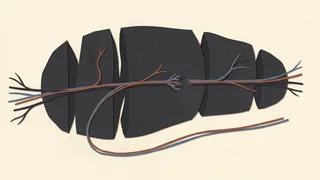 Macaque Ground-Truth ProjectomeCreate a primate reference dataset that tests long-range tracing.18–24 monthsProposed
- BuildBuildCoordinateCoordinateNeurotech
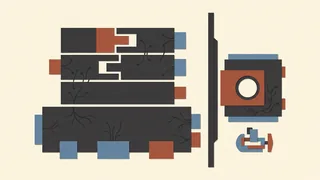 Virtual-Neuro FRO / ConsortiumBuild shared simulation infrastructure after a discovery target is proven.Launch decision in 6–12 months; 3–5 year programProposed
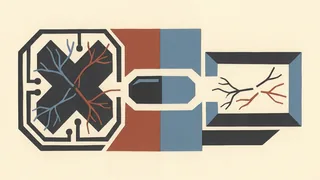
- EnableEnableBuildBuildProveProveEconomies & Governance
 Broad Listening & Simocracy deployment programMake participatory decision tools easier to adopt, evaluate, and maintain.18 monthsProposed
- EnableEnableCoordinateCoordinateResourceResourceNeurotech
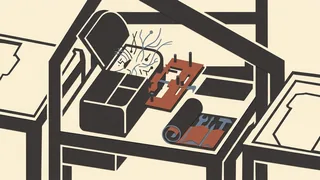 NeuroAI Fellows ProgramSupply persistent operational ownership and an AI-native talent pipeline.Immediate start proposedProposed
Public types here follow the FA2 draft vocabulary. See the methodology for how they relate to the Console toolkit.
From intervention to evidence
Running a program is only the beginning.
We track whether an intervention changes the underlying field — and update the hypothesis accordingly.
Explore how we measure field velocity